---
title: How to Choose a Rehab Facility for a Spinal Cord Injury
description: Choosing the right rehabilitation facility after a spinal cord injury is a crucial decision that can greatly impact recovery. Here is advice for people with spinal cord injuries and their families on how to find a rehab center that will meet your needs.
image: https://www.spinalcord.com/hubfs/Blog-Images/Wheelchair%20Weddings/Physical%20Therapist%20Assisting%20Patient%20In%20Walking-402029-edited.jpeg
---
[  ](https://www.spinalcord.com/)
MENU **

**
[
The Purpose Behind Spinalcord.com
** Play
Dale Swope's Story
](https://www.youtube.com/watch?v=C1kPXDw_CQU) [For Advice Call:
(877) 336-7192
](tel:8773367192) 
- [About](https://www.spinalcord.com/about-us)
- [About Us](https://www.spinalcord.com/about-us)
- [Our Team](https://www.spinalcord.com/our-team)
- [Trusted By](https://www.spinalcord.com/trusted-by)
- [Journal](https://www.spinalcord.com/blog)
- [Spinal Cord Injury](https://www.spinalcord.com/spinal-cord-injury)
- Spinal Injury Types
- [What is Spinal Cord?](https://www.spinalcord.com/what-is-the-spinal-cord)
- [Types of Spinal Cord Injuries](https://www.spinalcord.com/types-of-spinal-cord-injuries)
- [Secondary Complications](https://www.spinalcord.com/secondary-complications-after-sci-spinal-cord-injury)
- [Cervical Spine](https://www.spinalcord.com/cervical-spinal-cord-injury)
- [Thoracic Spine](https://www.spinalcord.com/thoracic-spinal-cord-injury)
- [Lumbar Spine](https://www.spinalcord.com/lumbar-l1-l5-vertebrae-spinal-cord-injury)
- [Sacral Spine](https://www.spinalcord.com/sacral-spine-s1-s5-vertebrae-injuries-sacral-sparing)
- Paralysis Types
- [Paralysis](https://www.spinalcord.com/paralysis)
- [Types of Paralysis](https://www.spinalcord.com/types-of-paralysis)
- [Monoplegia](https://www.spinalcord.com/monoplegia)
- [Diplegia](https://www.spinalcord.com/diplegia)
- [Hemiplegia](https://www.spinalcord.com/hemiplegia)
- [Paraplegia](https://www.spinalcord.com/paraplegia)
- [Quadriplegia | Tetraplegia](https://www.spinalcord.com/quadriplegia-tetraplegia)
- Additional Info
- [Spinal Cord Injury Lawyer](https://www.spinalcord.com/spinal-cord-injury-lawyer)
- [Causes](https://www.spinalcord.com/causes-of-non-traumatic-traumatic-spinal-cord-injuries)
- [Symptoms](https://www.spinalcord.com/signs-symptoms-of-spinal-cord-injuries)
- [Prognosis](https://www.spinalcord.com/prognosis-of-spinal-cord-injuries)
- [Mental Health Care After SCI](https://www.spinalcord.com/mental-health-care-after-sci)
- [Life After SCI](https://www.spinalcord.com/life-after-a-spinal-cord-injury)
- [Resources for Veterans](https://www.spinalcord.com/blog/topic/veterans)
- [Brain Injury](https://www.spinalcord.com/traumatic-brain-injury-acquired-brain-injury)
- Brain Injury Types
- [Traumatic Brain Injury](https://www.spinalcord.com/traumatic-brain-injury)
- [ Acquired Brain Injury](https://www.spinalcord.com/acquired-brain-injury)
- [Anoxic Brain Injury](https://www.spinalcord.com/anoxic-brain-injury)
- [Diffuse Axonal Brain Injury](https://www.spinalcord.com/diffuse-axonal-brain-injury)
- [ Focal Brain Injury](https://www.spinalcord.com/focal-brain-injury)
- [ Subdural Hematoma](https://www.spinalcord.com/subdural-hematoma)
- [ Concussion](https://www.spinalcord.com/concussion)
- [ Brain Aneurysm](https://www.spinalcord.com/brain-aneurysm)
- [ Coma](https://www.spinalcord.com/coma)
- Lobes of the Brain
- [ Brain Lobes Overview](https://www.spinalcord.com/lobes-of-the-brain)
- [ Frontal Lobe](https://www.spinalcord.com/frontal-lobe)
- [ Parietal Lobe](https://www.spinalcord.com/parietal-lobe)
- [ Occipital Lobe](https://www.spinalcord.com/occipital-lobe)
- [ Temporal Lobe](https://www.spinalcord.com/temporal-lobe)
- [ Limbic Lobe](https://www.spinalcord.com/limbic-lobe)
- [ Insular Cortex](https://www.spinalcord.com/insular-cortex)
- Additional Info
- [Brain Injury Treatment](https://www.spinalcord.com/brain-injury-treatment/brain-injury-lab)
- [ Brain Injury Lawyer](https://www.spinalcord.com/brain-injury-lawyer)
- [ Causes](https://www.spinalcord.com/causes-of-traumatic-and-acquired-brain-injuries)
- [ Symptoms](https://www.spinalcord.com/traumatic-brain-injury-tbi-symptoms)
- [ Prognosis](https://www.spinalcord.com/brain-injury-prognosis-for-tbi-abi)
- [ Resources For Veterans](https://www.spinalcord.com/blog/best-resources-for-veterans-with-spinal-cord-injuries)
- [Treatment ](https://www.spinalcord.com/treatment-for-brain-spinal-cord-injuries)
- [Physician Directory](https://www.spinalcord.com/brain-and-spinal-cord-injury-physician-directory)
- [Rehabilitation Directory](https://www.spinalcord.com/spinal-cord-injury-hospitals-rehabilitation-directory)
- [Intensive SCI Rehabilitation Centers](https://www.spinalcord.com/intensive-sci-rehabilitation-centers)
- [Technology Advancements ](https://www.spinalcord.com/sci-technology-advancements)
- [Activity Based Therapy Centers](https://www.spinalcord.com/activity-based-therapy-centers)
- [Brain Injury Treatment](https://www.spinalcord.com/brain-injury-treatment/brain-injury-lab)
- [Prevention](https://www.spinalcord.com/spinal-cord-injury-prevention)
- [Legal Options](https://www.spinalcord.com/legal-considerations-for-common-types-of-brain-and-spinal-cord-injuries)
- Legal Assistance
- [Brain Injury Lawyer](https://www.spinalcord.com/brain-injury-lawyer)
- [Spinal Cord Injury Lawyer](https://www.spinalcord.com/spinal-cord-injury-lawyer)
- [Where To Start](https://www.spinalcord.com/brain-spinal-cord-injury-lawyer-where-to-start)
- [When To Get A Lawyer - eBook](https://www.spinalcord.com/your-guide-to-knowing-when-to-get-a-lawyer)
- [Speak With An Injury Lawyer](https://www.spinalcord.com/spinal-cord-injury-legal-help-get-a-lawyer)
- [Protecting an Accident Scene](https://www.spinalcord.com/protecting-an-accident-crime-scene)
- Legal Considerations
- [Overview](https://www.spinalcord.com/legal-considerations-for-common-types-of-brain-and-spinal-cord-injuries)
- [Car Accidents](https://www.spinalcord.com/car-accidents)
- [Contact Sports](https://www.spinalcord.com/contact-sports)
- [Acts of Violence](https://www.spinalcord.com/acts-of-violence)
- [Workplace Injuries](https://www.spinalcord.com/workplace-injuries)
- [Slips and Falls](https://www.spinalcord.com/slips-and-falls)
- [Contusions](https://www.spinalcord.com/contusions)
- Personal Injury Claims
- [Types](https://www.spinalcord.com/types-of-personal-injury-claims)
- [How to File a Personal Injury Claim](https://www.spinalcord.com/how-to-file-a-personal-injury-claim-for-a-brain-or-spinal-cord-injury)
- [Resources](https://www.spinalcord.com/spinal-cord-resources)
- Coping & Support
- [Survivor Stories](https://www.spinalcord.com/blog/topic/survivor-stories-inspiration)
- [Family & Friends](https://www.spinalcord.com/family-friends-of-brain-spinal-cord-injury-patients)
- [Support Groups](https://www.spinalcord.com/spinal-cord-injury-support-groups)
- [Support Groups Interactive Map](https://www.spinalcord.com/spinal-cord-injury-support-groups-map)
- [Advocacy Groups](https://www.spinalcord.com/advocacy-groups)
- Financial Resources
- [Financial Help](https://www.spinalcord.com/financial-resources)
- [Grants](https://www.spinalcord.com/spinal-cord-injury-grants)
- [Compensation](https://www.spinalcord.com/spinal-cord-injury-compensation)
- [Brain & SCI Medical Expenses](https://www.spinalcord.com/brain-and-spinal-cord-injury-medical-expenses)
- [Money Management Tips](https://www.spinalcord.com/money-management-tips)
- [Life Care Plan](https://www.spinalcord.com/spinal-cord-injury-life-care-plan)
- Legal Assistance
- [Brain Injury Lawyer](https://www.spinalcord.com/brain-injury-lawyer)
- [Spinal Cord Injury Lawyer](https://www.spinalcord.com/spinal-cord-injury-lawyer)
- [Where To Start](https://www.spinalcord.com/brain-spinal-cord-injury-lawyer-where-to-start)
- [Speak With An Injury Lawyer](https://www.spinalcord.com/spinal-cord-injury-legal-help-get-a-lawyer)
- [Personal Injury Lawyer](https://www.swoperodante.com/tampa-personal-injury-lawyer/)
- Digital Resources
- [Frequently Asked Questions & Answers](https://www.spinalcord.com/frequently-asked-questions-and-answers)
- [When To Get A Lawyer](https://www.spinalcord.com/your-guide-to-knowing-when-to-get-a-lawyer)
- [Organizing Life From A Hospital](https://www.spinalcord.com/blog/traumatic-injury-digital-tools-organize-from-hospital)
- [Free Brain and Spinal Cord eBooks](https://www.spinalcord.com/spinal-cord-resources)
- [Spinal Cord Infographics](https://www.spinalcord.com/infographics)
- [SCI Life Uncovered Podcast](https://www.spinalcord.com/sci-life-uncovered/episode-1)
- Local Resources
- [Florida Spinal Cord Injury Resources ](https://www.spinalcord.com/florida-sci-resources)
- [Local Assistance](https://www.spinalcord.com/florida-personal-injury-claims)
- [Map of State Resources](https://www.spinalcord.com/state-programs)
- [Community](https://www.spinalcord.com/spinal-cord-injury-community)
- [Trusted Organizations](https://www.spinalcord.com/trusted-by-the-spinal-cord-injury-community)
- [Events Calendar](https://www.spinalcord.com/events)
- [Podcast](https://www.spinalcord.com/sci-life-uncovered/episode-1)
- Recognition
- [Best of Awards](https://www.spinalcord.com/best-of-awards)
- [Trusted By Designation](https://www.spinalcord.com/trusted-by-the-spinal-cord-injury-community)
- [** ](tel:8773367192)
- [** ](https://www.spinalcord.com/blog/how-to-choose-a-rehab-facility-for-a-spinal-cord-injury#)
- [**
**(877) 336-7192**
](tel:8773367192)
- [**
**Contact Us**
](https://www.spinalcord.com/contact-us)
# How to Choose a Rehab Facility for a Spinal Cord Injury
Author: [Spinal Cord Team](https://www.spinalcord.com/meet-our-authors)
Publish Date: November 21, 2025
Choosing the right rehabilitation facility after a spinal cord injury is a crucial decision that can greatly impact recovery. Here is advice for people with spinal cord injuries and their families on how to find a rehab center that will meet your needs.
In this guide, we explain how specialized spinal cord injury rehab centers differ from general rehab units, what qualifications and specialties to look for, how to compare facilities, and key questions to ask when touring a center.
Also check out our directories of spinal cord injury healthcare facilities:
- [Hospitals & Rehabilitation Centers for Spinal Cord Injuries](https://www.spinalcord.com/spinal-cord-injury-hospitals-rehabilitation-directory)
- [Activity-Based Therapy Centers for Spinal Cord Injuries](https://www.spinalcord.com/activity-based-therapy-centers)
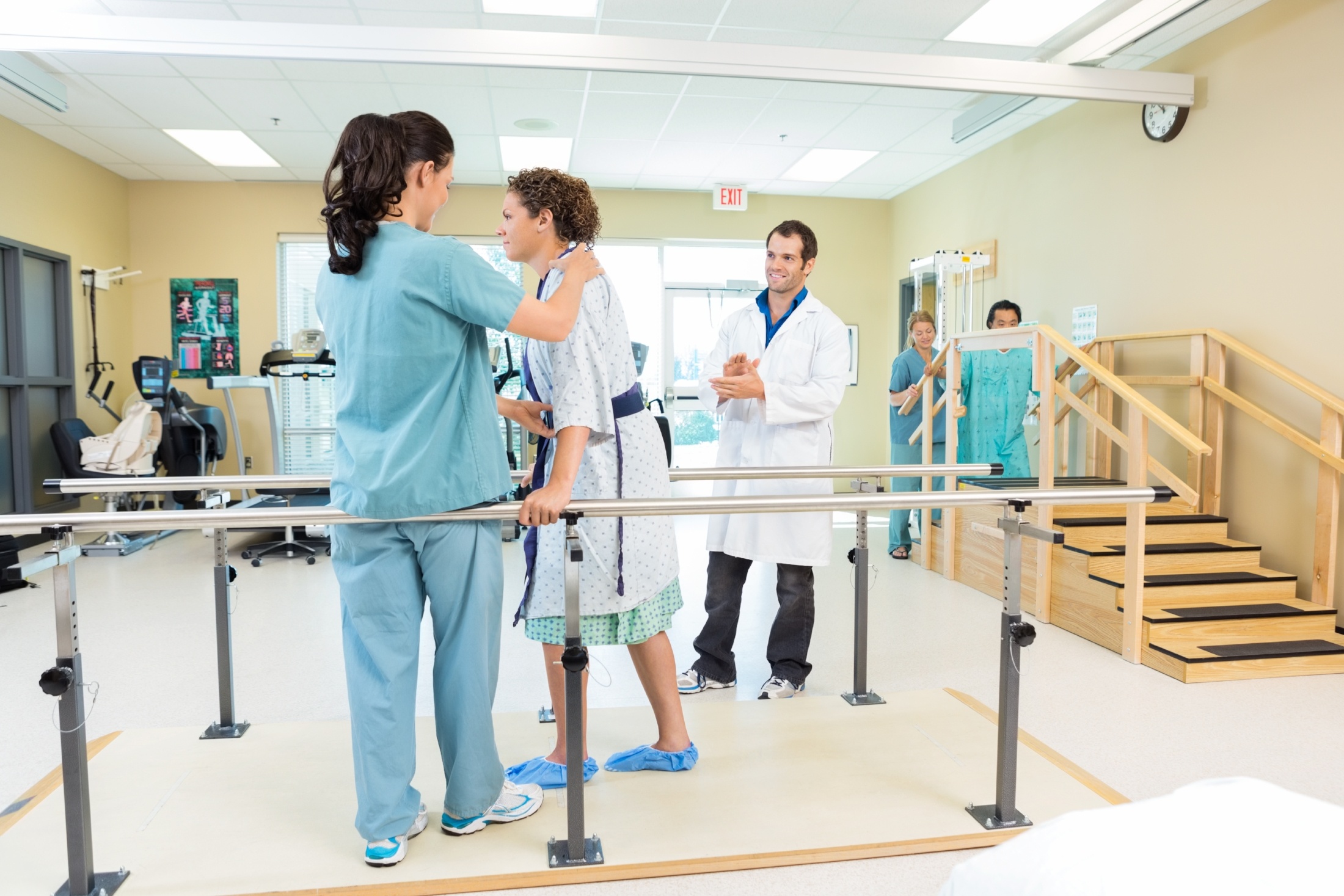
## Specialized Spinal Cord Injury Rehab vs. General Hospital Rehab
[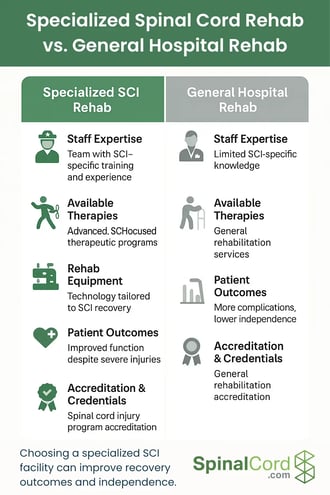](https://www.spinalcord.com/hubfs/Specialized%20Spinal%20Cord%20Rehab%20vs%20General%20Rehab.webp)Inpatient rehabilitation for spinal cord injury is best done at a specialized SCI rehab facility, not just any hospital rehab unit.
The reason is that SCI brings complex medical and functional challenges, from paralysis and mobility needs to risks like autonomic dysreflexia and pressure sores, which not all general rehab settings are equipped to handle.
A local hospital’s rehab wing might be convenient, but it may not offer the level of service needed for such a complex injury. Experts emphasize the importance of finding a rehabilitation center specifically focused on spinal cord injury, as this will provide the tailored care required for maximum recovery.
Research shows that patients with SCI who undergo rehabilitation in specialized spinal injury centers [achieve better functional outcomes](https://scireproject.com/evidence/rehabilitation-practices/specialized-vs-general-sci-units-acute-care/) (even though they often have more severe injuries to start with) compared to those in general rehabilitation units.
Specialized centers tend to have interdisciplinary teams and protocols in place that reduce complications and improve independence. In short, an SCI-specific rehab hospital can make a significant difference in the recovery journey.
## Qualifications and Specialties to Look For
When evaluating rehab facilities, it’s important to consider their credentials, experience, and specialized services. Here are key qualifications and features to look for:
### Expert Multidisciplinary Team
A top-notch SCI rehab center will have a multidisciplinary team of healthcare professionals who specialize in spinal cord injury care. This team should include a board-certified physiatrist (rehabilitation doctor), rehabilitation nurses with SCI experience, physical and occupational therapists, and other specialists working together.
Reputable SCI rehab hospitals [should have a multi-displicinary team](https://www.christopherreeve.org/wp-content/uploads/2024/04/Rehabilitation-and-Choosing-a-Rehab-QA-1-24-A.pdf) to assist in recovery. Their specialized training means they understand the unique needs of SCI patients, like managing neurogenic bowel/bladder, spasticity, skin integrity, respiratory issues, and mobility training.
A staff experienced with treating spinal cord injuries makes a big difference. Find out if the facility’s staff regularly treats SCI cases and how many SCI patients per year they see, as a higher volume often correlates with greater expertise.
### Accreditation and Certifications
Check that the facility is properly accredited and meets high standards of care. In the U.S., look for accreditation by the Commission on Accreditation of Rehabilitation Facilities (CARF) or the Joint Commission.
CARF offers a [specialty accreditation in Spinal Cord Injury rehabilitation](https://carf.org/accreditation/programs/medical-rehabilitation/), which is above and beyond general rehab accreditation. A facility that is CARF-accredited for SCI has passed an in-depth review of its spinal cord injury program.
This distinction reassures you that the hospital adheres to best practices for SCI recovery. Also, some rehab centers (often larger academic or model system hospitals) might have staff with additional certifications in spinal cord injury medicine or rehabilitation nursing, which is a plus.
### Specialized Programs & Technology
The best SCI rehab facilities provide advanced, specialized therapy programs. Look for centers that offer state-of-the-art technology and interventions for spinal cord injury. Examples include activity-based therapies (intensive exercise programs aiming to stimulate neurorecovery), functional electrical stimulation bikes, locomotor training (body-weight-supported treadmill training), exoskeleton-assisted walking, neuromuscular electrical stimulation, and adaptive sports or recreation therapy.
A dedicated SCI rehab will typically have specialized equipment (standing frames, pool for aquatic therapy, overhead track systems, etc.) and the expertise to use them. They may also provide advanced diagnostic services on-site to monitor things like bladder function or skin health as you progress. These resources indicate a facility that goes beyond the basics to maximize recovery potential.
### Comprehensive Continuum of Care
Spinal cord injury recovery doesn’t end with inpatient rehab, so consider what else the facility offers. Does the center provide a full continuum of care, from acute rehab through outpatient therapy and follow-up services?
Many top SCI programs have step-down day programs, outpatient clinics, and even wellness or vocational programs to support ongoing progress after discharge. They might also facilitate peer support groups, mental health counseling, and patient education programs.
A quality facility will recognize that rehabilitation involves physical, emotional, and practical support for the patient and family over the long term. Additionally, inquire whether the program helps with equipment needs (for example, wheelchair fitting and assistive technology evaluations) and home modifications or return-to-home training.
### Track Record and Outcomes
Finally, look into the facility’s outcomes if available. Some specialized rehab hospitals track their patients’ progress and publish outcome statistics. [Tracking patient outcomes and sharing outcome statistics](https://pmc.ncbi.nlm.nih.gov/articles/PMC11366401/) demonstrates accountability and a commitment to improvement.
For example, you might ask: What percentage of the center’s SCI patients are able to return home to live independently, rather than going to a nursing facility? Or, what is their average improvement in functional scores, and do they have any data on recovery benchmarks? It can be reassuring to choose a hospital known for successfully discharging patients back to community living and for making significant gains in function during rehab.
## Comparing Rehabilitation Facilities
Finding the best rehab option means you’ll want to research and compare a few facilities before deciding. [Experts recommend comparing at least three different rehabilitation programs](https://shepherd.org/treatment/conditions/spinal-cord-injury/choosing-rehabilitation-center/) to get a sense of which one fits your needs best. Start by gathering detailed information on each potential facility, including their specialties, staff credentials, therapy programs, location, and outcomes. Many rehab centers have admissions liaisons who can answer questions by phone, and it’s often possible to schedule a tour (in-person or virtual) to see the equipment and meet the team.
Key factors for comparison include:
### Experience and Focus
Does each hospital specialize in spinal cord injury rehabilitation, or is SCI just one of many conditions they handle? A dedicated SCI center is likely to have deeper expertise. Also consider how many years the program has been in operation and how many SCI patients they treat annually. A long-established program that sees a high volume of SCI cases may indicate a wealth of experience.
### Clinical Capabilities
Compare what medical services and supports are available on-site. For example, can the facility handle patients who are ventilator-dependent or have other complex medical issues? Is there an intensive care unit (ICU) or specialty unit for higher-level care if needed?
A rehab center that can manage life-threatening emergencies or medical complications on-site helps avoid interruptions in therapy caused by transfers back to a general hospital.
Also, look at the range of therapy disciplines offered. Most rehab centers have physical and occupational therapy, but do they also have specialized speech therapy (for breathing or swallowing issues if relevant), recreation therapy, neuropsychology, etc.? The more comprehensive the services, the better they can address every aspect of recovery.
### Therapy Intensity and Schedule
One major point of comparison is how much therapy time patients get each day and week. Ask each facility about their typical therapy intensity. For example, “How many hours of physical and occupational therapy do patients receive per day?” and “Are therapies provided five days a week or seven?”
An aggressive therapy schedule can improve outcomes, but it should also be balanced with the patient’s tolerance and medical condition. Some top rehab centers offer additional therapeutic activities on evenings or weekends (like recreational outings or extra practice sessions) which can enhance recovery.
### Outcomes and Success Rates
As mentioned, if you can get data on outcomes, use it in your comparison. Metrics like the percentage of patients returning home versus to a facility, average length of stay, and 30-day hospital readmission rates can serve as quality indicators.
For example, a rehab program where the vast majority of patients return to independent living and have low complication rates suggests a high standard of care. Don’t hesitate to ask each center, “What makes your outcomes stand out?” or “Do you participate in any national data tracking or research studies for SCI outcomes?” Engaged staff and a culture of improvement often translate to better care.
### Facility Environment and Amenities
The feel of the environment can also be an important factor. Some families compare things like patient-to-nurse ratio (which affects how much attention and care you get), whether rooms are private or shared, and what patient amenities are available (therapy gyms, outdoor areas, technology labs, etc.). While these might seem like minor details, comfort and environment can impact mood and motivation during the lengthy rehab process.
A tour can help you gauge cleanliness, accessibility (e.g., are there ceiling track lifts in rooms?), and overall atmosphere. Is the facility welcoming and uplifting? These qualitative factors might sway your decision if you have multiple highly qualified options.
As you compare, consider location as well. How far are you willing to travel for a top rehab program? Sometimes the best SCI rehabilitation hospital might be in another state. Being away from home can be challenging, but many specialized centers have lodging for family or other supports to make a temporary relocation feasible.
Balancing having family nearby with getting the best care is a personal decision. Make a list of pros and cons for each facility you’re considering, and involve your loved ones in discussing what matters most. By doing a thorough comparison of expertise, services, outcomes, and practical factors, you’ll be empowered to choose the rehab setting that offers the best chance at a strong recovery for you or your family member.
## Questions to Ask When Touring a Rehab Center
[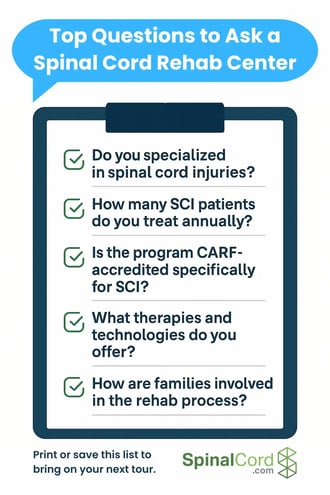](https://www.spinalcord.com/hubfs/Questions%20to%20Ask%20a%20Spinal%20Cord%20Injury%20Rehab%20Center.webp)When you’ve narrowed down your options and perhaps scheduled a tour or consultation with a rehab facility, it’s important to come prepared with questions. Asking the right questions will help you gauge the program’s quality and whether it’s the right fit. Here are some crucial questions to consider asking the admissions staff or rehab team:
- ** Does the facility specialize in SCI rehabilitation, and how many spinal cord injury patients do you treat each year?** This speaks to experience and focus on SCI care.
- ** What is the staff-to-patient ratio, and are the clinicians experienced in SCI-specific care?** You want to ensure you’ll get sufficient attention from qualified staff who understand SCI.
- ** Does the center offer the latest therapies and rehabilitation technology for SCI**, such as activity-based therapy programs, advanced mobility or gait training equipment, functional electrical stimulation, or exoskeletons?
- **How are families involved in the rehabilitation process?** Can family members receive training to assist in care? Are there education programs or counseling for families, and does the facility offer any on-site housing or accommodations for family to stay nearby during rehab? Family support can be vital, and the center should welcome family participation in therapy and planning.
- ** Is the rehabilitation program accredited specifically for spinal cord injury care**, such as CARF accreditation for a Spinal Cord System of Care?
- ** What do outcomes look like for patients here, and do you track success rates, discharge destinations, and patient satisfaction?** Their answers will indicate how results-driven the program is.
These questions will help you gather the information you need. Don’t be shy about asking anything else that matters to you; good rehab centers will appreciate families who ask informed questions.
You might also ask about things like what a typical day in rehab is like, how they handle medical emergencies, how they assist with discharge planning, or if former patients are available as mentors to talk to.
By asking thorough questions, you not only get answers, but you also get a feel for the staff’s communication and transparency. Ideally, their responses will put you at ease that the facility is equipped and committed to supporting your loved one’s recovery.
## Directories and Resources for Finding SCI Rehab Centers
Finding reputable spinal cord injury rehabilitation facilities can be made easier by using certain directories and resources. Here are some avenues to help you locate and evaluate the right rehab program:
### SCI Model System Centers
The [National Institute on Disability, Independent Living, and Rehabilitation Research](https://acl.gov/about-acl/about-national-institute-disability-independent-living-and-rehabilitation-research) (NIDILRR), part of the U.S. Department of Health & Human Services, funds a network of Spinal Cord Injury Model System Centers across the United States.
These centers are nationally recognized for excellence in SCI care and research. An SCI Model System Center provides a comprehensive continuum of care from initial injury through rehabilitation and community re-entry, and they typically have exceptional expertise and resources.
Model System Centers are located in various states, and each contributes data to national SCI research. If one of these centers is accessible, it’s worth strong consideration. Lists of Model SCI Centers are available through the [Model Systems Knowledge Translation Center](https://msktc.org/) (MSKTC) and NIDILRR.
### Accredited Rehab Hospital Search
Another useful tool is [the directory provided by the Commission on Accreditation of Rehabilitation Facilities (CARF)](https://carf.org/find-provider/). CARF’s website allows you to search for accredited rehabilitation programs by location and specialty. Since spinal cord injury-specific accreditation exists, you can look up which hospitals have CARF accreditation in SCI rehabilitation.
Choosing a CARF-accredited SCI program can give you confidence that the facility meets rigorous standards. Additionally, the Joint Commission’s quality reports or state health department resources might provide information on rehab facilities’ performance.
Any facility you consider should be fully licensed and accredited. Accreditation is a non-negotiable baseline for safety and quality.
### SpinalCord.com Resources
SpinalCord.com offers several helpful resources to assist families in finding and evaluating rehab options. You can use the interactive map of Activity-Based Therapy centers (available on the SpinalCord.com website) to locate specialized therapy programs nationwide that focus on neurologic recovery and exercise-based rehabilitation.
There is also a state-by-state directory of SCI resources (the State Programs map), which can help you find local organizations, rehabilitation facilities, and services in your home state.
These tools are designed to simplify the search for quality care. In addition, if you need personalized guidance, you can reach out to a SpinalCord.com recovery advocate through the contact form.
Recovery advocates have experience with spinal cord injuries and can answer questions, provide recommendations, and help connect you with an appropriate rehab center or resource based on your situation.
### Other Support Organizations
Besides the above, consider tapping into organizations like the Christopher & Dana Reeve Foundation or United Spinal Association. They offer free information specialists who can provide lists of rehab facilities and share experiences. The Paralysis Resource Center publishes [fact sheets on choosing a rehab center](https://www.christopherreeve.org/wp-content/uploads/2024/04/Rehabilitation-and-Choosing-a-Rehab-QA-1-24-A.pdf) and maintains a helpline.
United Spinal also has local chapters that might know of reputable centers in your area. Connecting with SCI support groups (including online communities) can yield firsthand recommendations or warnings about rehab facilities from people who have “been there.” While personal anecdotes should be weighed alongside professional credentials, they can offer insight into a center’s culture and strengths.
In summary, take advantage of these directories and resources to create a shortlist of qualified rehab facilities. Cross-reference multiple sources. For example, if a hospital appears in the Model Systems list, has CARF accreditation, and is recommended by others in the SCI community, it’s likely a strong candidate. You don’t have to navigate this search alone; organizations like SpinalCord.com and others can help you find the best possible care.
## Why SpinalCord.com is Trusted
SpinalCord.com is a trusted resource in the spinal cord injury community because of our commitment to accuracy, empathy, and expert-driven content. It collaborates with medical professionals and SCI specialists to ensure the information provided is up-to-date and reliable. Every article and resource is thoroughly researched, reflecting a dedication to credibility. SpinalCord.com is not only an information hub but also a source of personal support. Our team includes SCI recovery advocates who understand the journey first-hand and are available to assist families and survivors directly. We take an empathetic, patient-centered approach, presenting complex medical and rehab information in a clear, compassionate way. By providing interactive tools (like maps of therapy centers and state resources) and personalized support, SpinalCord.com has become a leading guide for thousands of individuals navigating life after spinal cord injury. Our ultimate goal is to empower you with knowledge and connect you with the best possible care.
## References
1. Christopher & Dana Reeve Foundation. *How do I find a rehabilitation facility?* Available from: [https://www.christopherreeve.org/todays-care/living-with-paralysis/newly-paralyzed/how-do-i-find-a-rehabilitation-facility/](https://www.christopherreeve.org/todays-care/living-with-paralysis/newly-paralyzed/how-do-i-find-a-rehabilitation-facility/)
2. SCIRE Professional. *Specialized vs General SCI Units (Acute Care).* Available from: [https://scireproject.com/evidence/rehabilitation-practices/specialized-vs-general-sci-units-acute-care/](https://scireproject.com/evidence/rehabilitation-practices/specialized-vs-general-sci-units-acute-care/)
3. Christopher & Dana Reeve Foundation, Paralysis Resource Center. *Rehabilitation and Choosing a Rehabilitation Facility.* Fact sheet, 2024. Available from: [https://www.christopherreeve.org/wp-content/uploads/2024/04/Rehabilitation-and-Choosing-a-Rehab-QA-1-24-A.pdf](https://www.christopherreeve.org/wp-content/uploads/2024/04/Rehabilitation-and-Choosing-a-Rehab-QA-1-24-A.pdf)
4. Kennedy Krieger Institute. *Important Criteria to Consider When Choosing a Spinal Cord Rehabilitation Center.* Available from: [https://www.kennedykrieger.org/sites/default/files/library/documents/patient-care/conditions/spinal-cord-injury-and-paralysis/important-criteria-consider-selecting-when-choosing-spinal-cord-rehabilitation-center_0.pdf](https://www.kennedykrieger.org/sites/default/files/library/documents/patient-care/conditions/spinal-cord-injury-and-paralysis/important-criteria-consider-selecting-when-choosing-spinal-cord-rehabilitation-center_0.pdf)
5. Shepherd Center. *Choosing a SCI Rehabilitation Center.* Available from: [https://shepherd.org/treatment/conditions/spinal-cord-injury/choosing-rehabilitation-center/](https://shepherd.org/treatment/conditions/spinal-cord-injury/choosing-rehabilitation-center/)
**Topics:** Recovery & Rehabilitation, newly injured individuals
### Stay Updated on Advancements On Traumatic Brain & Spinal Cord Injuries
About the Author
#### Spinal Cord Team
The authors of Spinalcord.com are made up of attorneys, those in the medical field, and survivors of spinal cord injuries or traumatic brain injuries. Learn more about our team of authors including a brief biography that explains how they impact the SCI and TBI community.
[Learn More About the Author](https://www.spinalcord.com/meet-our-authors)
**Leave a Comment**
[](https://cta-redirect.hubspot.com/cta/redirect/575040/dc8bc979-ba55-463a-9400-f92cbdebcb1a)
true
### Spinal Cord Injury
- [Types of Spinal Cord Injuries](https://www.spinalcord.com/types-of-spinal-cord-injuries)
- [Secondary Complications](https://www.spinalcord.com/secondary-complications-after-sci-spinal-cord-injury)
- [Causes](https://www.spinalcord.com/signs-symptoms-of-spinal-cord-injuries)
- [Symptoms](https://www.spinalcord.com/types-of-spinal-cord-injuries)
- [Prognosis](https://www.spinalcord.com/prognosis-of-spinal-cord-injuries)
- [Legal Help](https://www.spinalcord.com/spinal-cord-injury-legal-help-get-a-lawyer)
### Brain Injury
- [Types of Brain Injuries](https://www.spinalcord.com/types-of-traumatic-brain-injury)
- [Causes](https://www.spinalcord.com/causes-of-traumatic-and-acquired-brain-injuries)
- [Symptoms](https://www.spinalcord.com/traumatic-brain-injury-tbi-symptoms)
- [Prognosis](https://www.spinalcord.com/brain-injury-prognosis-for-tbi-abi)
- [Legal Help](https://www.spinalcord.com/brain-injury-legal-help-get-a-lawyer)
### Finding Treatment
- [Physician Directory](https://www.spinalcord.com/brain-and-spinal-cord-injury-physician-directory)
- [Rehabilitation Directory](https://www.spinalcord.com/spinal-cord-injury-hospitals-rehabilitation-directory)
- [Technology Advancements](https://www.spinalcord.com/sci-technology-advancements)
- [Prevention](https://www.spinalcord.com/spinal-cord-injury-prevention)
### Legal Options
- [Spinal Cord Injury Lawyer](https://www.spinalcord.com/spinal-cord-injury-lawyer)
- [Brain Injury Lawyer](https://www.spinalcord.com/brain-injury-lawyer)
- [Types of Personal Injury Claims](https://www.spinalcord.com/types-of-personal-injury-claims)
- [Where To Start](https://www.spinalcord.com/brain-spinal-cord-injury-lawyer-where-to-start)
- [Local Assistance](https://www.spinalcord.com/florida-personal-injury-claims)
#### [About Us](https://www.spinalcord.com/about-us)
Spinal cord injuries are traumatic for patients and their families. They cause disruptive changes to every aspect of your life and there is a lot of new information to navigate and understand. Our experts have collected everything in one place to help you learn more about your injury, locate doctors and treatment centers, find financial support, and get assistance navigating your next move.
[Learn More About SpinalCord.com →](https://www.spinalcord.com/about-us)
## [Contact Us](https://www.spinalcord.com/contact-us)

** [877-336-7192](tel:8773367192)
** [support@spinalcord.com](mailto:support@spinalcord.com)
[**](https://www.facebook.com/spinalcordcom) [**](https://www.linkedin.com/company/spinalcord-com/) [**](https://twitter.com/SpinalCordCom) [**](https://www.youtube.com/channel/UCAbz2AC18acXQkpMNPeDIqg)
Copyright 2026 | All Rights Reserved. [Spinal Cord, Inc.](https://www.spinalcord.com)
Sponsored by [Tampa personal injury lawyers](https://www.swoperodante.com/tampa-personal-injury-lawyer/) at Swope, Rodante P.A. a Florida law firm located at 1234 E 5th Ave, Tampa, FL 33605.
The information provided by SpinalCord.com is not a substitute for professional medical advice, diagnosis, or treatment, see [ Disclaimer Policy.](https://www.spinalcord.com/disclaimer)
[**](https://www.spinalcord.com/blog/how-to-choose-a-rehab-facility-for-a-spinal-cord-injury#)
[**](https://www.spinalcord.com/blog/how-to-choose-a-rehab-facility-for-a-spinal-cord-injury#)
```json
{
"@context" : "https://schema.org",
"@type" : "WebSite",
"name" : "Spinal Cord, Inc.",
"potentialAction" : {
"@type" : "SearchAction",
"query-input" : "required name=search_query",
"target" : "https://www.spinalcord.com/search?q={search_query}"
},
"url" : "https://www.spinalcord.com/"
}
```
```json
{
"@context" : "https://schema.org",
"@type" : "Organization",
"contactPoint" : [ {
"@type" : "ContactPoint",
"contactType" : "customer service",
"telephone" : "+1-877-336-7192"
} ],
"legalName" : "Spinal Cord, Inc.",
"logo" : "https://www.spinalcord.com/hubfs/Logos/spinal-cord_png.png",
"sameAs" : [ "https://www.facebook.com/spinalcordcom", "https://twitter.com/SpinalCordCom", "https://www.youtube.com/channel/UCAbz2AC18acXQkpMNPeDIqg", "http://www.linkedin.com/company/spinalcord-com" ],
"url" : "https://www.spinalcord.com/"
}
```
```json
{
"@context" : "http://schema.org",
"@type" : "Article",
"articleBody" : "The spinal cord is a vital part of the human body. As the vehicle responsible for carrying messages from the brain to the rest of the body and back again, even the smallest interference can be detrimental. Following a traumatic spinal cord injury, this bundle of nerves can become bruised, also known as a contusion. Because of the nature of the nervous system, any interference can constitute a serious spinal contusion, but these facts will help you dissect all of the information from the medical professionals.\n\nWhat Is a Spinal Contusion?
\n \n
\nMuch like any other bruise, a contusion can cause bleeding from local blood vessels and inflammation which, rather unlike bruises on other parts of the body, can have serious negative impacts on the spinal cord itself. Because the “blood must clot to stop the bleeding”a bruise results from contusions also increase cardiovascular risks.
\nFor example, the swelling a contusion can cause will often disrupt nerve impulses that travel from the brain to the body through the spinal cord, and the severity of this will depend upon the level of injury. Unlike a concussion, a contusion would not cause unconsciousness or a ‘blackout’, but instead cause the patient to feel a numbness or tingling in the extremities.
\nA contusion can cause spinal compression, which happens when there is pressure on the spinal cord. This can go on to cause an array of physical symptoms such as loss of sensation in the feet, inability to use the hands and loss of sexual ability. It must be noted that not all contusions cause spinal compression, and not all spinal compression is caused by a contusion, although they do often connect this way.
\nWarning Signs of a Serious Spinal Contusion to Watch For
\nFirstly, doctors will try and establish what area or limb the injury has affected. Spinal contusions most often “affect the upper extremities bilaterally and also sometimes involve the lower extremities,” according to Dr. Wong, an orthopedic physician.
\nSymptoms include “numbness, tingling, [or] electric shock-like sensations and burning in the extremities,” (American Association of Neurological Surgeons, 2016). Generally falling into the category of “spinal trauma” there are many symptoms which are similar to other forms of spinal trauma and spinal cord injury. Below are some symptoms of spinal trauma:
\n\n- Spinal shock — or the "loss of feeling or movement below site of injury" (Columbia University Medical Centre, 2016) that can last between hours and weeks
\n- Loss of bladder or bowel function
\n- Difficulty breathing
\n- Muscle spasticity
\n- Difficulty understanding speech
\n- Problems with attention
\n- Memory challenges
\n- Heart rate and blood pressure problems
\n
\nUnfortunately, it is sometimes challenging to identify which symptoms are due to a spinal contusion, and which ones are the result of a spinal cord injury directly. It can sometimes require a few days or weeks for the body to recover from spinal trauma and reveal if any permanent damage is left from the accident that caused the SCI.
\nUnderstanding what a contusion is, and how it can come into play following a spinal cord injury is important in order to clearly appreciate your injury, understand your diagnoses, and work toward treatment and a prognosis. Doctors can sometimes use jargon that’s difficult to understand, so the more you can educate yourself about your condition, the more control you can have in your recovery and treatment.
\nIf you still have questions about the details of the spinal cord and how it may be affected from your injury, please contact us or download our guide to understanding a spinal cord injury.",
"author" : {
"@type" : "Person",
"name" : "Spinalcord.com Team"
},
"datePublished" : "2020-12-03",
"image" : "https://www.spinalcord.com/blog/signs-of-a-serious-spinal-contusion",
"name" : "Warning Signs of a Serious Spinal Contusion",
"url" : "https://www.spinalcord.com/blog/signs-of-a-serious-spinal-contusion"
}
```
```json
{
"@context":"https://schema.org",
"@graph":[{"@type":"WebSite",
"@id":"https://spinalcord.com/#website",
"url":"https://www.spinalcord.com/blog/signs-of-a-serious-spinal-contusion",
"name":"Spinal Cord Inc",
"description":"The spinal cord is a vital part of the human body. As the vehicle responsible for carrying messages from the brain to the rest of the body and back again, even the smallest interference can be detrimental. Following a traumatic spinal cord injury, this bundle of nerves can become bruised, also known as a contusion. Because of the nature of the nervous system, any interference can constitute a serious spinal contusion, but these facts will help you dissect all of the information from the medical professionals.",
"inLanguage":"en-US"},
{
"@type":"ImageObject",
"@id":"Spinalcord Logo",
"inLanguage":"en-US",
"url":"https://www.spinalcord.com/hubfs/Logos/spinal-cord_png.png",
"width":327,"height":300,
"caption":"spinal contusion"},
{
"@type":"WebPage","@id":"https://www.spinalcord.com/blog/signs-of-a-serious-spinal-contusion/#webpage",
"url":"https://www.spinalcord.com/blog/signs-of-a-serious-spinal-contusion",
"name":"Warning Signs of a Serious Spinal Contusion",
"isPartOf":{"@id":"https://spinalcord.com/#website"},
"primaryImageOfPage":{"@id":"www.spinalcord.com/blog/signs-of-a-serious-spinal-contusion/#primaryimage"},
"datePublished":"2020-12-03T18:30:35+00:00","dateModified":"2020-12-03T18:30:35+00:00",
"author":{"@id":"https://www.spinalcord.com/meet-our-authors"},
"description":"The spinal cord is a vital part of the human body. As the vehicle responsible for carrying messages from the brain to the rest of the body and back again, even the smallest interference can be detrimental. Following a traumatic spinal cord injury, this bundle of nerves can become bruised, also known as a contusion. Because of the nature of the nervous system, any interference can constitute a serious spinal contusion, but these facts will help you dissect all of the information from the medical professionals.
What Is a Spinal Contusion?
Signs-of-a-spinal-contusion-title-image
Much like any other bruise, a contusion can cause bleeding from local blood vessels and inflammation which, rather unlike bruises on other parts of the body, can have serious negative impacts on the spinal cord itself. Because the “blood must clot to stop the bleeding”a bruise results from contusions also increase cardiovascular risks.
For example, the swelling a contusion can cause will often disrupt nerve impulses that travel from the brain to the body through the spinal cord, and the severity of this will depend upon the level of injury. Unlike a concussion, a contusion would not cause unconsciousness or a ‘blackout’, but instead cause the patient to feel a numbness or tingling in the extremities.
A contusion can cause spinal compression, which happens when there is pressure on the spinal cord. This can go on to cause an array of physical symptoms such as loss of sensation in the feet, inability to use the hands and loss of sexual ability. It must be noted that not all contusions cause spinal compression, and not all spinal compression is caused by a contusion, although they do often connect this way.
Warning Signs of a Serious Spinal Contusion to Watch For
Firstly, doctors will try and establish what area or limb the injury has affected. Spinal contusions most often “affect the upper extremities bilaterally and also sometimes involve the lower extremities,” according to Dr. Wong, an orthopedic physician.
Symptoms include “numbness, tingling, [or] electric shock-like sensations and burning in the extremities,” (American Association of Neurological Surgeons, 2016). Generally falling into the category of “spinal trauma” there are many symptoms which are similar to other forms of spinal trauma and spinal cord injury. Below are some symptoms of spinal trauma:
Spinal shock — or the loss of feeling or movement below site of injury (Columbia University Medical Centre, 2016) that can last between hours and weeks
Loss of bladder or bowel function
Difficulty breathing
Muscle spasticity
Difficulty understanding speech
Problems with attention
Memory challenges
Heart rate and blood pressure problems
Unfortunately, it is sometimes challenging to identify which symptoms are due to a spinal contusion, and which ones are the result of a spinal cord injury directly. It can sometimes require a few days or weeks for the body to recover from spinal trauma and reveal if any permanent damage is left from the accident that caused the SCI.
Understanding what a contusion is, and how it can come into play following a spinal cord injury is important in order to clearly appreciate your injury, understand your diagnoses, and work toward treatment and a prognosis. Doctors can sometimes use jargon that’s difficult to understand, so the more you can educate yourself about your condition, the more control you can have in your recovery and treatment.
If you still have questions about the details of the spinal cord and how it may be affected from your injury, please contact us or download our guide to understanding a spinal cord injury.",
"breadcrumb":{"@id":"https://www.spinalcord.com/blog/signs-of-a-serious-spinal-contusion/#breadcrumb"},
"inLanguage":"en-US","potentialAction":[{"@type":"ReadAction","target":["https://www.spinalcord.com/blog/signs-of-a-serious-spinal-contusion"]}]},
{
"@type":"BreadcrumbList",
"@id":"https://www.spinalcord.com/blog/signs-of-a-serious-spinal-contusion/#breadcrumb",
"itemListElement":[{"@type":"ListItem",
"position":1,
"item":
{
"@type":"WebPage",
"@id":"https://spinalcord.com/",
"url":"https://spinalcord.com/",
"name":"Home"}},
{"@type":"ListItem",
"position":2,
"item":{"@type":"WebPage",
"@id":"https://spinalcord.com/blog/",
"url":"https://spinalcord.com/blog/",
"name":"Articles"}},
{"@type":"ListItem",
"position":3,
"item":{"@type":"WebPage",
"@id":"https://www.spinalcord.com/blog/signs-of-a-serious-spinal-contusion/",
"url":"https://www.spinalcord.com/blog/signs-of-a-serious-spinal-contusion/",
"name":"Warning Signs of a Serious Spinal Contusion"}}]},
{"@type":"Person",
"@id":"https://www.spinalcord.com/meet-our-authors",
"name":"Spinalcord Team",
"image":{"@type":"ImageObject",
"@id":"https://www.spinalcord.com/hubfs/Logos/spinal-cord_png.png",
"inLanguage":"en-US",
"url":"https://www.spinalcord.com/hubfs/Logos/spinal-cord_png.png",
"caption":"Spinalcord Team"},
"description":"The authors at SpinalCord.com come from diverse backgrounds including doctors, attorneys, medical journalist, and survivors of spinal cord injuries or traumatic brain injuries. Each author brings with them different experiences and expertise which when combined provide clinically accurate information which is useful to all individuals in the spinal cord and traumatic brain injury communities. Within the content you will find citations to medical journals, scientific research, as well as national and local resources to provide immediate support to families in need of assistance. Content is reviewed and updated regularly with changes in the clinical guidelines, new resources, and fresh ways to understand the content such as videos and infographics. ."
}
]}
```